Series 1 / Part 6
In previous posts I have discussed the seed of an idea for each work, that is, the seed from which the process of iterating toward a finished piece of art starts. Looking back, that seed has often been something quite basic. I have also noticed that the seed can also be categorised at two ends of a spectrum: a concrete shape or pattern; or an abstract process or theme. Here are the seeds of the art series so far:
- Crimson Sun: a sunflower (concrete)
- Quad Crystals: quadrilaterals radiating from the centre (concrete)
- Square Wave: Douglas Hofstadter’s parquet deformations (abstract)
- Nett: flocking behaviour of birds (abstract)
- Weave: mouse behaviour, moving and turning repeatedly (abstract)
- Ammonite: seeing a beautiful brass ammonite in a London library (concrete)
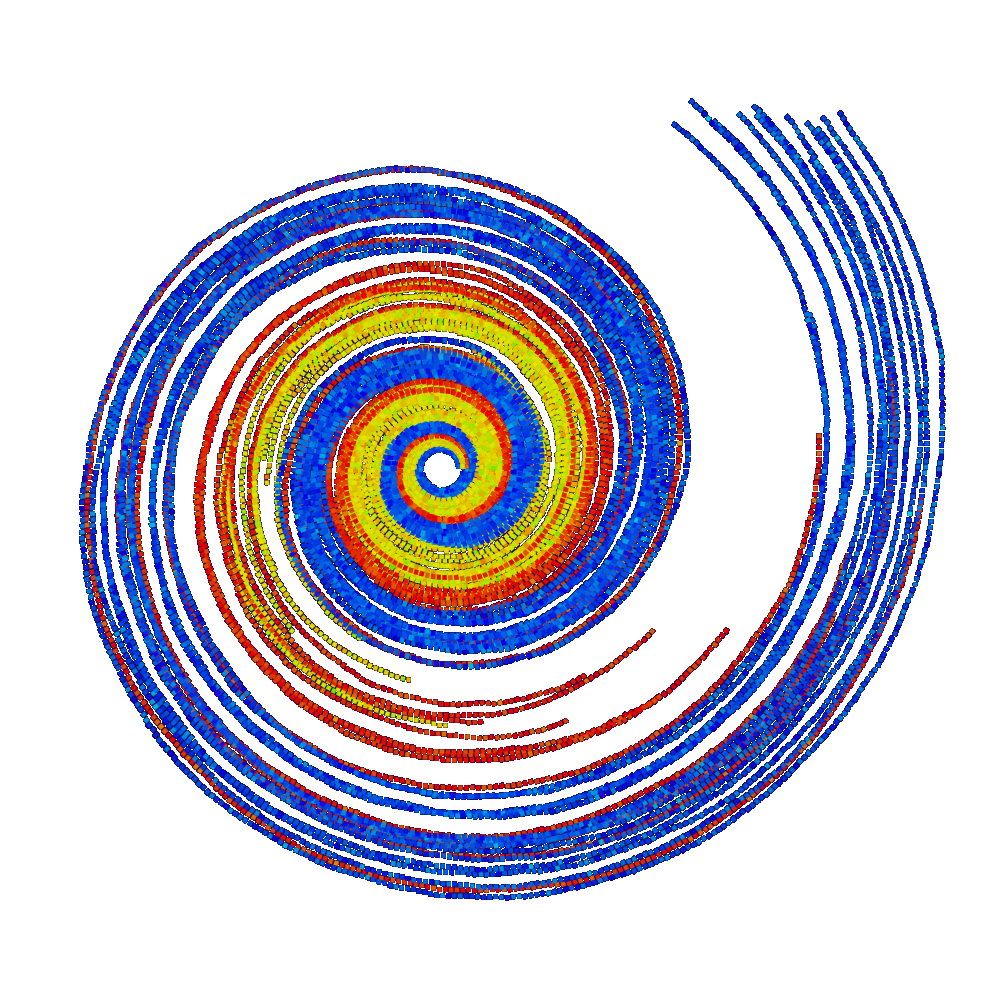
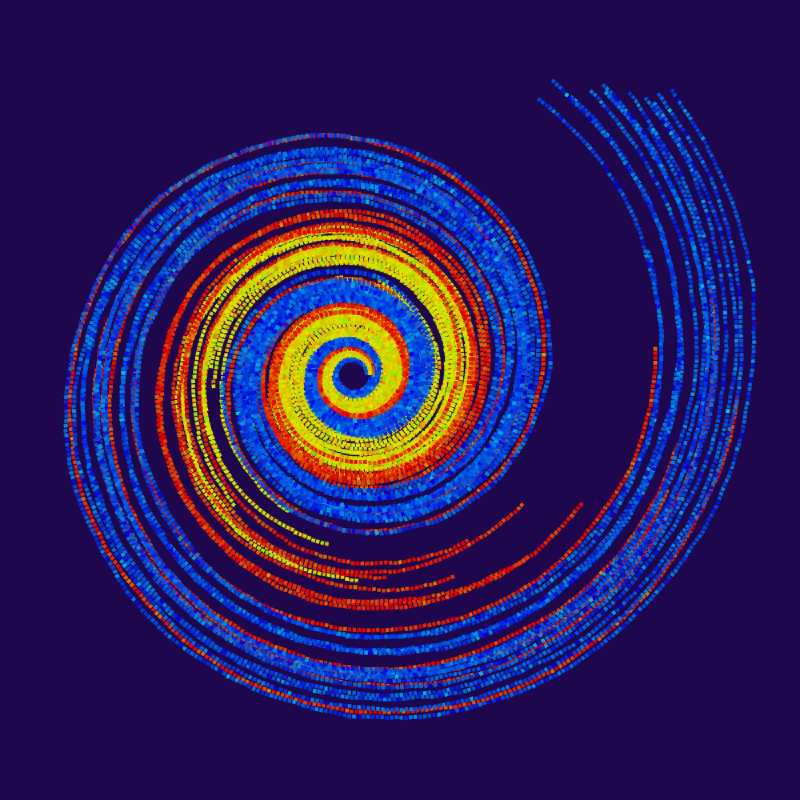
Back to Ammonite, this was indeed born quite simply from seeing a brass recreation of an Ammonite, the beautiful extinct spiral creature, whilst reading in a library. Interestingly, this is the first work in my series whose name has stayed the same from start to finish. In all other cases, the emergence of a new form quite removed from the original seed has given rise to a deserved change in name.
Ammonite is the final piece of Series 1, and therefore a good opportunity to summarise what I’ve learned from Series 1, some of which I’ve mentioned already, some of which I’m only mentioning for the first time here:
- The seed of an idea doesn’t have to be complex or well formed. Start with something basic and see where it takes you.
- Iterate, iterate, iterate. And when something unexpected and interesting emerges, go with the flow.
- Randomness is key to creating novel and interesting outcomes, but I have found it best not to play heavily with it too early. I have made better progress by developing the basic structure into something interesting first, and then starting to play more with randomness in tandem.
- Similarly, colour (and sometimes lack of it) is an incredibly important aspect. In some cases it might be the most important aspect, however I have found that it is easy to get sidetracked and head down a blind alley by playing too early with colour. Again, I have made better progress by working on the basic structure for a while first before starting to play heavily with colour in tandem.
- If artwork were like cooking, then the main ingredients are: form, colour, randomness. And there is a host of seasonings that can transform a dish, such as:
- Line thickness
- Applying alpha to colour
- Rounding sharp corners
- Forming polygons where there are currently dots or lines
- Deciding when and when not to fill polygons