Series 1 / Part 1
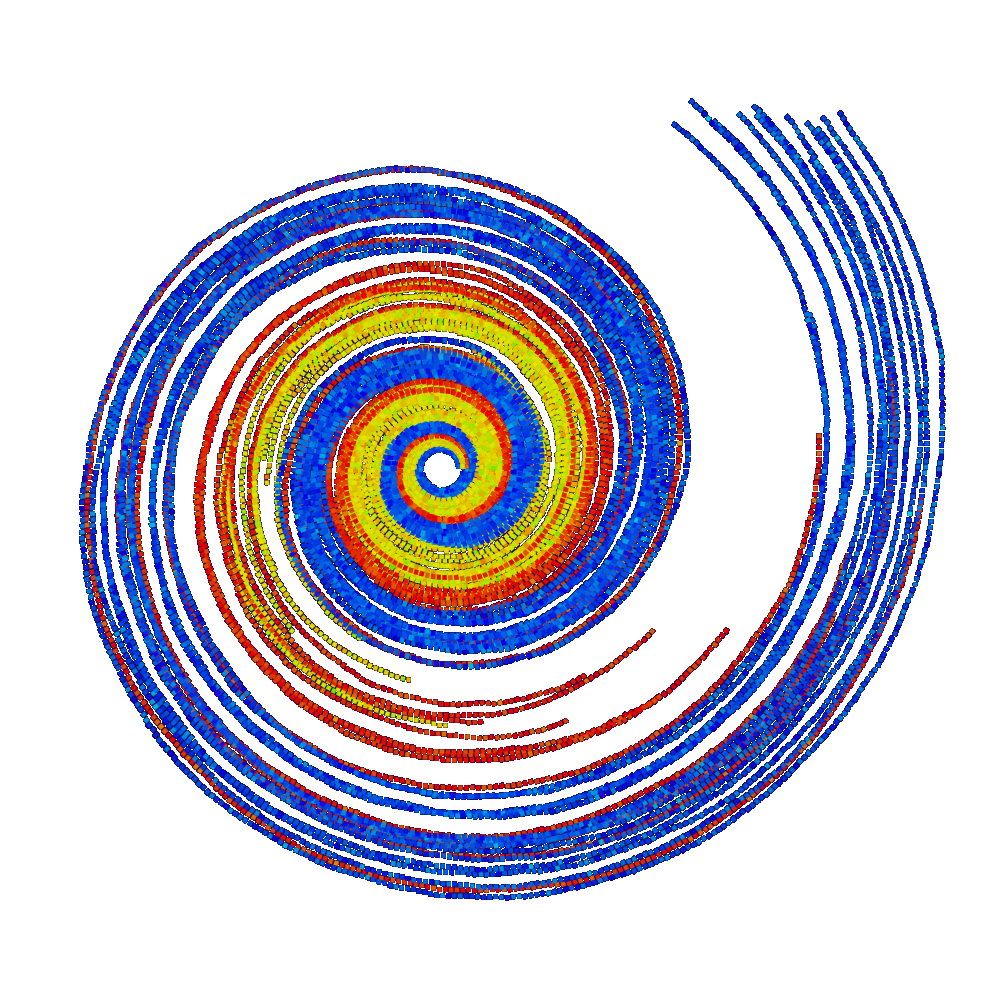
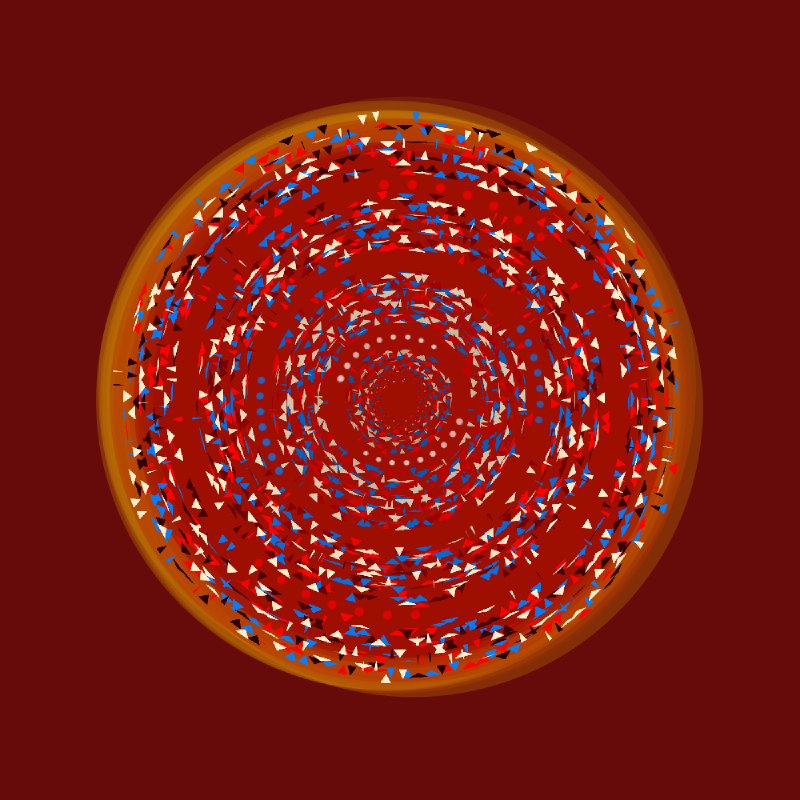
An interesting aspect of this work is the not-so-random placement and dimensions of the numerous triangles. A common strategy for this would be to use random number generation, however I wanted the placement to be much more homogeneous. Enter the Halton Sequence, a deterministic sequence which appears random for most purposes, however the generated numbers are well distributed as they progress.
The Halton Sequence requires seeding with an integer “base” from which to start. Each base will result in a different sequence, much like seeding a random number generator. For example, base 2 results in the following sequence:
1⁄2,
1⁄4, 3⁄4,
1⁄8, 5⁄8, 3⁄8, 7⁄8,
1⁄16, 9⁄16, 5/16, 13/16, 3/16, 11/16, ...
And base 3 results in the following:
1/3, 2/3,
1/9, 4/9, 7/9, 2/9, 5/9, 8/9,
1/27, 10/27, 19/27, 4/27, 13/27, 22/27, 7/27, ...
Hopefully this gives a little insight into the algorithm which underlies this piece.